


AI isn’t changing spending by convincing people to buy more. It’s changing how decisions get made before money ever leaves an account. As algorithms take over comparison, prediction, and personalization, a lot of familiar spending habits start to look inefficient or unnecessary. The shift isn’t loud, but it’s already altering what people value, what they ignore, and where money quietly flows instead.
1. Fewer Impulse Purchases, More Pre-Filtered Spending

AI-driven recommendations are slowly replacing impulse with anticipation. Instead of browsing aimlessly, people encounter products that align closely with their past behavior and preferences. According to consumer behavior research cited by McKinsey and purchasing pattern analysis from the National Retail Federation, AI-powered personalization tends to narrow choices rather than expand them. That narrowing changes how money gets spent.
When people trust that suggestions are relevant, they skip a lot of random experimentation. Spending becomes more intentional, even when it’s still frequent. The money doesn’t disappear—it concentrates.
2. Less Spending On “Research” And Comparison Tools

AI is eliminating entire categories of spending built around decision-making. Subscription services, premium reviews, and comparison platforms become less necessary when recommendations arrive bundled into the experience. People stop paying to figure out what to buy.
As that friction disappears, spending shifts toward outcomes rather than inputs. People care less about exploring options and more about getting something that works. The money moves away from intermediaries. It flows directly to products and services that meet expectations quickly.
3. Higher Willingness To Pay For Convenience

AI makes time savings more visible. According to behavioral economics research cited by Harvard Business Review and productivity studies referenced by Stanford’s Human-Centered AI Institute, people consistently value time-saving tools more once the savings feel concrete. AI makes those savings measurable. Convenience becomes easier to justify when it’s predictable.
This changes what feels “worth it.” Spending more upfront feels reasonable if it reliably removes friction later. People become less price-sensitive around services that integrate smoothly into daily routines.
4. Fewer Regret Purchases

As AI improves at matching people with what they’ll actually use, regret starts to decline. Purchases feel better aligned with needs and habits. That alignment reduces returns, cancellations, and abandoned subscriptions.
This doesn’t mean people buy less—it means they buy with fewer second thoughts. The emotional cost of spending drops. When regret fades, trust grows. That trust reshapes future decisions without needing conscious effort.
5. More Spending Based On Habit

AI systems are getting better at recognizing patterns that people don’t consciously track. According to consumer behavior research cited by McKinsey and usage-pattern analysis from Deloitte, AI-driven platforms increasingly prompt purchases when people are most likely to follow through, not when they’re most emotionally reactive. Spending becomes routine rather than reactive.
Over time, this shifts how people relate to money. Purchases feel less like emotional events and more like maintenance. The highs and lows flatten out. Money moves in smaller, steadier ways that feel easier to live with.
6. Declining Interest In Trend Cycles

As AI tailors recommendations more precisely, broad trend cycles lose influence. People stop caring what’s popular in general and focus on what works for them specifically. The need to stay current fades when relevance feels personalized. Spending detaches from collective hype.
This changes how products compete. Items don’t win because they’re everywhere—they win because they fit into someone’s existing habits. Money follows usefulness rather than visibility.
7. Increased Spending On Subscriptions
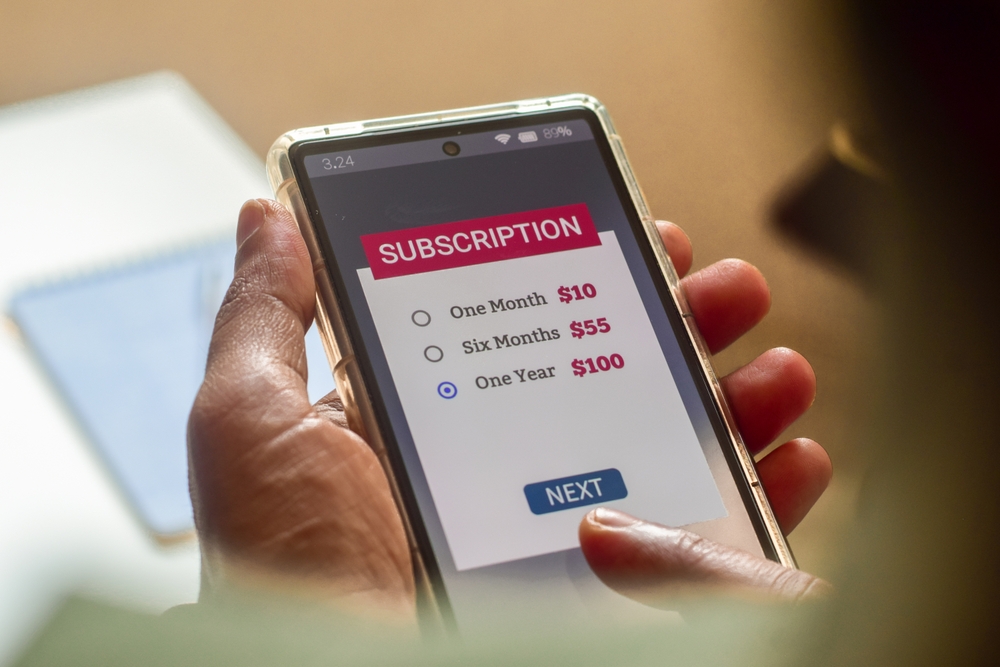
Static subscriptions lose appeal once AI-enabled services can adjust dynamically. According to subscription economy analysis from Zuora and consumer tech reporting cited by The Wall Street Journal, people are more willing to pay for services that evolve based on usage rather than offering fixed features. Adaptability becomes part of the value. Spending feels justified when services keep improving without prompting.
This creates longer-lasting relationships between consumers and platforms. People tolerate fewer subscriptions overall, but they commit more deeply to the ones that feel responsive. Money concentrates into fewer, more adaptive services.
8. Less Spending On “Just In Case” Purchases

AI reduces uncertainty around future needs by predicting behavior more accurately. People don’t stockpile as much or buy backups they never use. Shopping becomes more confident and less defensive. That confidence alters how often money gets spent unnecessarily.
This shows up in smaller ways. Fewer duplicates sit unused. Purchases align more closely with actual use. Spending feels lighter without requiring restraint.
9. Higher Spend On Products That Integrate

As AI connects tools, services, and devices, people become more sensitive to friction. Products that don’t integrate well feel expensive regardless of price. Spending shifts toward ecosystems that work together smoothly. Compatibility becomes a deciding factor.
People don’t necessarily articulate this change—they feel it. When something fits easily into what they already use, they’re more willing to pay for it. Money flows toward coherence.
10. More Money Flowing Toward Prevention

As AI becomes better at spotting problems early, people start paying to avoid issues rather than repair them. This shows up in healthcare monitoring, predictive maintenance, and financial alerts that intervene before something breaks. Spending shifts earlier in the timeline. The cost feels justified because the alternative is disruption.
People don’t experience this as spending more. It feels like fewer emergencies and fewer surprise bills. Over time, budgets become less reactive.
11. Reduced Spending On Products That Require Learning

AI lowers tolerance for friction. When tools require long onboarding or complex setup, people abandon them more quickly. Spending shifts toward products that work intuitively from the start. Ease becomes a baseline expectation.
This doesn’t mean people avoid complexity entirely. They just expect complexity to be handled quietly in the background. Products that demand sustained effort without payoff lose ground. Money follows usability.
12. Willingness To Pay For Fewer, Better Choices

As AI narrows options effectively, people stop equating value with variety. Having ten decent choices feels less appealing than having two that fit perfectly. Spending consolidates. Decision fatigue becomes expensive.
This changes how people justify purchases. Paying more for something that clearly fits feels rational rather than indulgent. Fewer decisions carry more weight.
13. Less Spending Driven By Anxiety

When AI handles tracking, reminders, and recommendations, people worry less about falling behind. They don’t feel the same pressure to keep up with trends, releases, or limited windows. The fear that drives impulsive spending weakens. Timing feels managed rather than urgent.
This doesn’t eliminate desire, but it reframes it. People wait more comfortably. Purchases feel less defensive. Money stays put until it has a reason to move.
14. Spending That Reflects Identity

As AI learns what people actually do rather than what they say they want, spending aligns more closely with lived behavior. Purchases reinforce existing habits instead of chasing imagined versions of the future. The gap between intention and action narrows. That shift changes what feels worth paying for.
People still evolve, but the evolution looks gradual rather than aspirational. Money supports how life is actually lived. Over time, spending feels more accurate and less performative.
This article is for informational purposes only and should not be construed as financial advice. Consult a financial professional before making investment or other financial decisions. The author and publisher make no warranties of any kind.