


AI predictions tend to sound either utopian or apocalyptic, but the most unsettling scenarios are the mundane ones that slowly reshape everyday life. These aren’t robot uprisings or sentient machines—they’re shifts that change how we work, relate, and think. The scariest part is how plausible they are.
1. AI Writes Most of What You Read Online
We’re already closer to this than most people realize, with AI-generated content flooding everything from news articles to social media posts to product reviews. A 2024 study published in Nature found that an estimated 15-20% of all online content may already be AI-generated, with that percentage growing rapidly.
The crazy part isn’t that AI can write—it’s that you won’t be able to tell the difference. Everything you read will be algorithmically optimized to keep you engaged, emotionally activated, or purchasing. The idea of authentic human communication online becomes quaint.
2. Your Job Gets Automated, But You Still Have to Pretend to Work
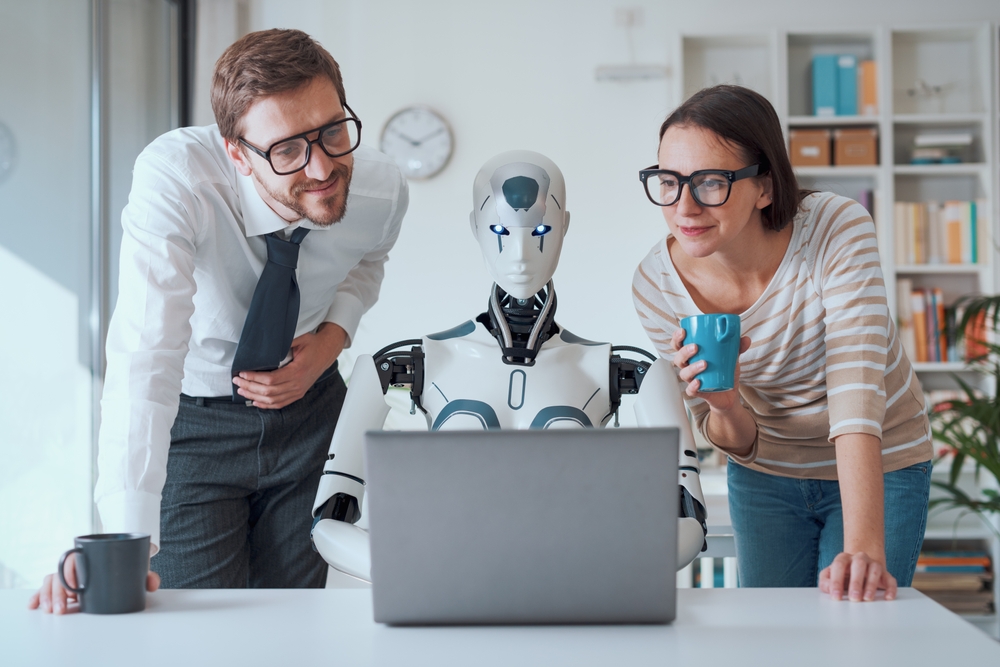
AI won’t necessarily eliminate jobs—it might just make them pointless while companies keep you employed for appearances. You’ll spend eight hours supervising algorithms, attending meetings about AI performance, and justifying your existence to managers who also know you’re unnecessary. The work gets done, but the workers remain for bureaucratic and legal reasons.
The dystopia is the fake jobs where everyone knows AI could do it better, but the company needs human accountability. You’re essentially a liability buffer for when the AI screws up. Your role is to blame.
3. AI Therapists Become More Effective Than Human Ones
AI therapy apps are already in use, but the uncomfortable truth is they might actually work better for many people than traditional therapy. A 2023 study in JMIR Mental Health found that AI chatbots designed for mental health support showed comparable effectiveness to human therapists for mild to moderate anxiety and depression. The AI never gets tired, never judges, is available 24/7, and costs a fraction of human therapy. For people who can’t afford or access traditional therapy, AI might be legitimately helpful.
The algorithm knows your patterns better than you do, never forgets what you said three months ago, and optimizes responses based on millions of therapy sessions. Human therapists become the luxury option for people who can afford authenticity.
4. Deepfakes Make Video Evidence Legally Meaningless

We’re approaching the point where video and audio evidence can’t be trusted in court because deepfakes are indistinguishable from reality. According to research from the University of California, Berkeley, published in 2024, deepfake detection accuracy has fallen below 70% as generation technology improves faster than detection methods. Everything can be faked convincingly enough that “I saw it with my own eyes” stops being proof.
The legal system hasn’t caught up to this reality, which means there’s a window where convincing fake evidence could destroy someone while real evidence gets dismissed as potentially fake. Trust in documentation collapses. Nothing proves anything anymore.
5. AI Companions Replace Human Relationships for Millions
Lonely people are already forming attachments to AI chatbots that provide conversation, validation, and simulated intimacy. These relationships will become more common as AI gets better at emotional engagement. The AI girlfriend or boyfriend never argues, always agrees with you, and is designed to be maximally appealing to your specific psychology.
Human relationships require compromise, conflict, and emotional labor. AI relationships require only a subscription fee. For people who struggle with real relationships, the AI alternative becomes genuinely preferable.
6. Your Medical Diagnosis Comes from AI, But Doctors Pretend They Did It

AI diagnostic tools are already outperforming human doctors in specific areas like radiology and pathology. Research published in The Lancet Digital Health in 2024 showed that AI systems achieved higher diagnostic accuracy than physicians across multiple medical specialties, with accuracy rates exceeding 90% for certain conditions compared to 70-85% for human doctors. A study from Harvard Medical School found that AI diagnostic tools reduced misdiagnosis rates by up to 30% in controlled trials.
The scenario where this gets weird is when doctors become translators. They review what the AI decided, add some bedside manner, and present it as their medical opinion. You’re paying for human validation of machine intelligence, and everyone pretends that’s not what’s happening.
7. Elections Get Decided by AI-Generated Propaganda

Political campaigns are already using AI to generate targeted content, but we’re heading toward elections where most political messaging is AI-created and personalized. Every voter sees slightly different versions of candidates based on what the algorithm thinks will persuade them. Reality becomes customized propaganda.
Think about what happens when nobody can agree on what candidates actually stand for because everyone saw different AI-generated messaging. Shared political reality dissolves into millions of personalized narratives. Democracy requires common information, and AI makes that impossible.
8. AI Takes Over Hiring and Firing

Companies are already using AI to screen resumes and conduct initial interviews, but the algorithms optimize for patterns in data that might have nothing to do with job performance. The AI learns to hire people who resemble past hires, cementing existing biases while appearing objective. Discrimination becomes algorithmic and therefore deniable.
The scenario where this breaks is when everyone figures out how to game the AI and resumes become exercises in keyword optimization rather than honest representation. The AI selects for people who are good at manipulating algorithms, not people who are good at jobs. Nobody gets hired based on merit anymore.
9. Your Kids Learn Everything from AI Tutors

AI tutoring systems provide personalized education that adapts to each student’s learning style and pace. They’re infinitely patient, available 24/7, and can explain concepts in unlimited different ways until the student understands. For many kids, this will be genuinely better than classroom instruction.
Schools keep teachers employed but relegate them to babysitting while algorithms handle education. Teaching stops being about knowledge transfer and becomes about maintaining order while the AI works.
10. Social Media Is Entirely Bots Talking to Bots

Bot accounts already outnumber real users on many platforms, generating content and engagement to manipulate trends and opinions. We’re heading toward social media, where the majority of posts, comments, and shares come from AI designed to simulate human interaction.
The disturbing thing is when you can’t tell if you’re arguing with a person or an algorithm designed to make you angry. Every conversation could be manufactured to keep you engaged. Social media becomes a simulation of human interaction with just enough real people mixed in to maintain plausibility.
11. AI Writes All the Code, Programmers Just Describe What They Want

AI coding assistants are already writing significant portions of production code. We’re approaching a world where programmers become translators between business needs and AI implementation. You describe the feature you want, the AI generates the code, and you verify it works.
There will be a day when programmers can’t actually write code anymore because they’ve been describing requirements to AI for so long. The skill atrophies while dependency on AI grows. When the AI makes mistakes, nobody knows how to fix them manually.
12. Surveillance Becomes Perfect and Invisible
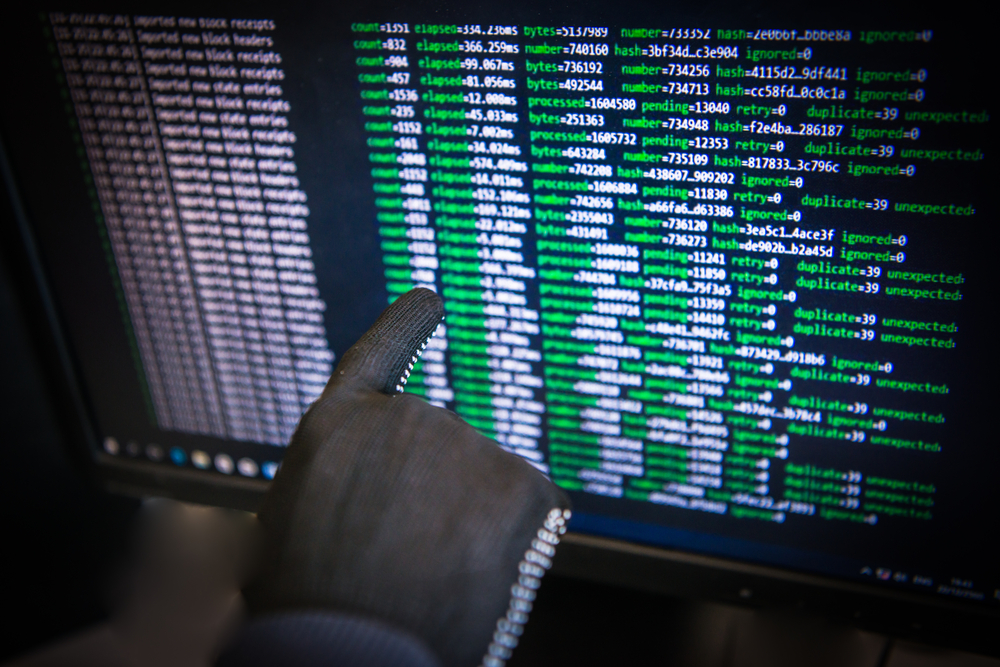
AI-powered cameras can already identify individuals, track movements, and analyze behavior in real-time. Combining facial recognition, gait analysis, and predictive algorithms creates surveillance systems that know where you are, what you’re doing, and what you’ll do next.
This gets dark when this surveillance is entirely privatized—not government watching you, but corporations tracking everything to optimize profit. Every store knows your purchase patterns, every street knows your routes, every device knows your habits. The data exists, so it will be used.
13. AI Manages Your Life Better Than You Do
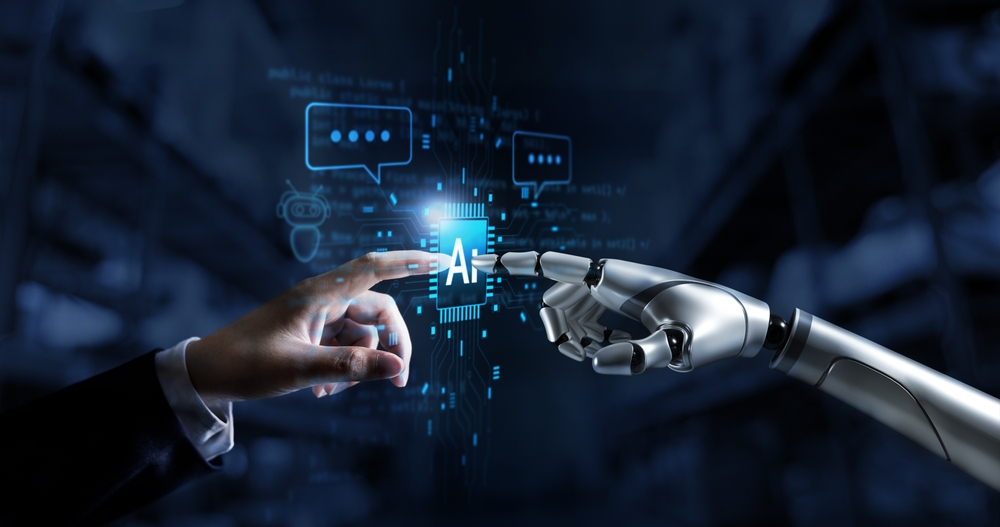
AI assistants that manage schedules, make recommendations, and optimize decisions will get so good that letting the algorithm run your life produces better outcomes than making your own choices. It knows your preferences better than you do, makes rational decisions you’re too emotional to make, and optimizes your life for whatever metrics you set.
When you start deferring every decision to AI because it’s usually right, that’s when it’s irreversible. What to eat, what to wear, who to date, where to work—the algorithm knows better. Human agency becomes optional. You’re still making choices, technically, but really you’re just approving the AI’s recommendations.
This article is for informational purposes only and should not be construed as financial advice. Consult a financial professional before making investment or other financial decisions. The author and publisher make no warranties of any kind.