


The American middle-class dream has become a financial trap that’s systematically destroying wealth for millions of families. What looks like normal, responsible living—the kind portrayed in commercials and celebrated as success—is actually a carefully constructed path to financial stress and depleted savings. These aren’t reckless spending habits or obvious mistakes; they’re the accepted lifestyle choices that society tells you represent achievement, and they’re silently bankrupting people who think they’re doing everything right.
1. The “Starter Home” That Becomes a Forever Financial Drain

Buying the largest house you can afford based on your pre-approval amount is celebrated as smart investing and building equity. Lenders qualify you for mortgages that consume 28-30% of your gross income, telling you this is normal and sustainable. What they don’t explain is that homeownership costs far exceed the mortgage payment—property taxes, insurance, maintenance, utilities, and endless repairs can easily add another 40-50% on top of your mortgage.
That $400,000 home with a $2,500 monthly mortgage payment actually costs $3,500-4,000 per month when you include everything, and major expenses like roof replacements ($15,000), HVAC systems ($8,000), or foundation issues ($20,000+) hit without warning. Families spend decades “house poor,” sacrificing retirement savings, emergency funds, and quality of life to maintain a home that’s too expensive. The equity you’re building is illusory when you’re depleting retirement accounts and carrying credit card debt to afford the lifestyle your house demands.
2. Two New Cars in the Driveway on Payment Plans
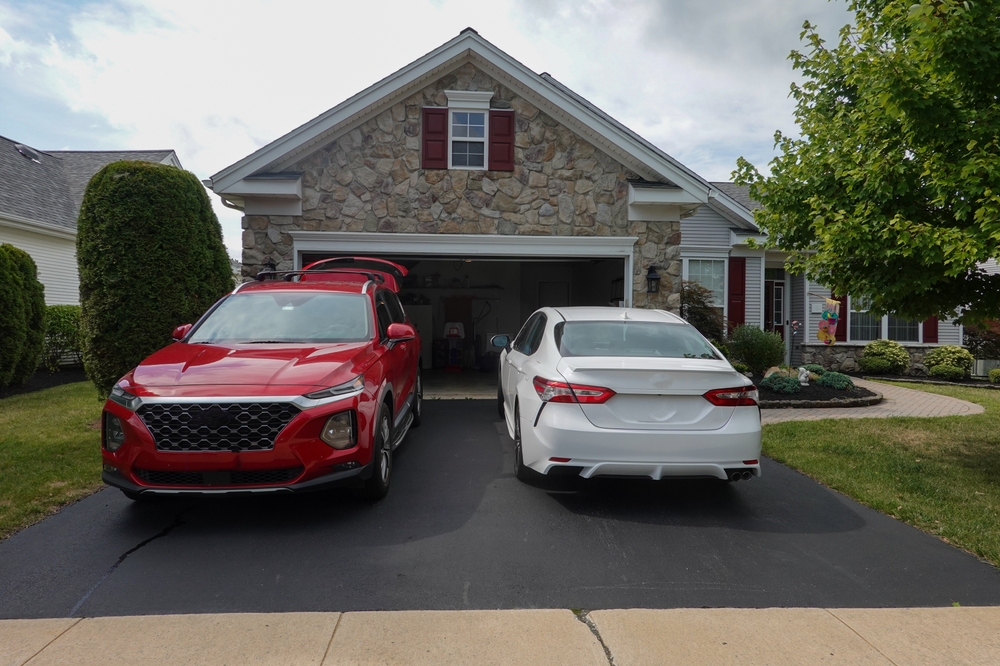
Middle-class families have normalized having two car payments simultaneously, treating reliable transportation as requiring new or nearly-new vehicles financed for 5-7 years. The average new car payment now exceeds $700 per month, meaning two car payments can easily total $1,200-1,500 monthly. Americans treat these payments as inevitable as utilities, not recognizing they’re luxury purchases disguised as necessities.
A couple with two financed vehicles at $1,400 combined monthly payments spends $16,800 annually just on car payments, before insurance, gas, maintenance, and registration. Over a typical working life, this financing cycle—always having car payments, trading in vehicles before they’re paid off—can consume $300,000-500,000 that could have built substantial wealth. Reliable used cars exist at a fraction of the cost, but the middle-class aspiration of driving new vehicles keeps families on a financing treadmill that prevents wealth accumulation.
3. Private School and Elite College at Any Cost

Middle-class families sacrifice their entire financial futures to provide private education, believing they’re investing in their children’s success. Private elementary and high school can cost $15,000-40,000 per child annually, and parents drain retirement accounts or take on debt to afford it. Then comes college, where families either pay $200,000-300,000 out of pocket or their children graduate with crippling debt.
The messaging that education is the path to success has convinced parents that financial destruction is worth it if their kids attend the “right” schools. Families who could retire comfortably instead have no savings because they spent $500,000+ on private education. Meanwhile, their children either carry massive student loan debt or watch their parents struggle financially for decades to recover; neither outcome represents the success they were promised, but the middle-class belief that education justifies any cost keeps this cycle destroying family wealth.
4. The Family Vacation Arms Race

Middle-class families now treat annual expensive vacations as mandatory rather than optional, with Disney trips, cruises, or resort vacations costing $5,000-12,000+ becoming the norm. Social media has turned vacations into competitive displays, and parents feel they’re depriving their children if they don’t provide these experiences. What was once a luxury reserved for special years has become an expected annual expense.
A family spending $8,000 annually on vacations they can’t actually afford is diverting money that could eliminate debt or build emergency savings. Over 20 years, that’s $160,000 plus investment returns—potentially $300,000+ that could have secured retirement. These vacations are often financed through credit cards or payment plans, meaning families pay interest on memories while their financial security crumbles, but admitting you can’t afford a nice vacation feels like admitting failure in middle-class culture.
5. Keeping Up With Lifestyle Inflation After Every Raise

Middle-class earners increase spending immediately after salary increases, upgrading homes, cars, and lifestyle rather than banking the difference. A $10,000 raise becomes a $600 monthly car upgrade, a nicer apartment, or increased discretionary spending that exactly matches the income increase. This lifestyle inflation trap ensures that higher earners feel just as financially stressed as they did before—they’re just broke at a higher income level.
People earning $100,000 often have no more savings than when they earned $60,000 because every raise triggered lifestyle upgrades. The psychological satisfaction of feeling successful through consumption prevents wealth building regardless of income. Families who instead maintained their previous lifestyle and saved raises would accumulate hundreds of thousands in investments, but the middle-class imperative to display success through consumption makes this discipline nearly impossible for most.
6. The Wedding That Costs a Down Payment

The average American wedding now costs $30,000-35,000, with middle-class couples routinely spending $40,000-60,000 for what they’re told should be “the perfect day.” Parents drain savings or retirement accounts to fund weddings, and couples start marriages with debt from financing celebrations. What’s marketed as a once-in-a-lifetime event that deserves unlimited spending is actually a down payment on a house or years of retirement savings.
The wedding industry has successfully convinced middle-class families that anything less than an elaborate celebration represents failure or not valuing the occasion. Couples who could start marriages with $50,000 in savings instead begin with debt or depleted accounts, significantly impacting their long-term wealth building. The social pressure to have an impressive wedding overrides financial logic, and families destroy their economic futures for a single day that guests will barely remember.
7. Childcare That Costs More Than College Tuition

Middle-class families with young children routinely spend $15,000-25,000+ annually per child on daycare, with costs in major cities easily exceeding $30,000. Many families have one parent’s entire salary consumed by childcare costs, yet they continue working for “career continuity” or benefits. The financial toll of these years is devastating, preventing families from building emergency funds or saving for retirement during crucial earning years.
A family spending $40,000 annually on childcare for two kids over five years pays $200,000 before either child enters kindergarten—more than many state college degrees. This expense comes during the exact years when compound interest could work most powerfully for retirement savings. Families emerge from the childcare years financially hollowed out, with no savings and often carrying debt from covering gaps, yet the middle-class expectation is that you continue working regardless of whether it makes financial sense.
8. The Belief That Investing Can Wait Until You’re Comfortable

Middle-class families postpone retirement investing until they feel financially comfortable, waiting for the perfect moment when other expenses are handled. They plan to start investing seriously once the car is paid off, or after they buy the house, or when the kids are older—always later, always waiting for financial breathing room that never comes. This delay costs exponentially more than any temporary sacrifice would have.
Someone who waits from age 25 to 35 to start investing misses the most powerful decade of compound growth. Investing $500 monthly from 25-35 and then stopping beats investing $500 monthly from 35-65 due to compound interest on those early years. Middle-class families who prioritize current comfort and lifestyle over early investing sacrifice millions in retirement wealth, yet financial education rarely emphasizes how devastating this delay truly is.
9. Treating Every Kids’ Activity and Sport as Required

Middle-class parents now spend thousands annually per child on sports leagues, music lessons, tutors, camps, and activities that are treated as developmental necessities rather than luxuries. The pressure to provide every opportunity means families spend $5,000-15,000+ per child annually on enrichment activities. Parents feel guilty saying no, believing they’re limiting their children’s potential if they can’t afford every activity.
A family with two kids spending $12,000 annually on activities over 15 years spends $180,000 on youth sports and lessons—money that could have funded college or built substantial wealth. Most children don’t become professional athletes or musicians, meaning this spending produces memories and skills but rarely practical returns. The middle-class belief that good parenting requires endless activities keeps families financially stressed and unable to save.
10. The Kitchen Renovation Before the Emergency Fund

Middle-class homeowners prioritize home improvements over emergency savings, spending $30,000-80,000 on kitchen or bathroom remodels while having less than $5,000 in liquid savings. The cultural emphasis on beautiful homes makes these renovations feel necessary rather than optional, and HELOC financing makes them dangerously accessible. Families take on debt for aesthetic improvements while remaining one emergency away from financial crisis.
A $50,000 kitchen remodel financed at 7% costs over $70,000 with interest, and provides minimal return on investment when you eventually sell. That money could have been a complete emergency fund plus retirement investments, but the middle-class aspiration for showcase homes overrides financial security. When unexpected expenses hit, families with stunning kitchens but no savings end up in credit card debt cycles they can’t escape.
11. Healthcare Costs and Insurance That Never Stop Rising

Middle-class families with employer insurance still face devastating healthcare costs through high-deductible plans, copays, and uncovered expenses. Families routinely spend $8,000-15,000 annually on premiums plus out-of-pocket costs before insurance covers anything meaningful. One serious illness or injury can bankrupt families with insurance who face $10,000+ deductibles and 20% coinsurance on massive bills.
The American healthcare system is designed to extract maximum wealth from middle-class families who have insurance but still face catastrophic costs. Families delay necessary care due to costs, then face emergency situations with even bigger bills. This isn’t reckless spending—it’s being trapped in a system where healthcare costs actively prevent wealth building, and one medical emergency can wipe out years of careful saving.
12. The Premium Grocery Bill and Food Spending That Doubled

Middle-class grocery spending has exploded as organic, premium, and convenience foods became normalized rather than splurges. Families spending $250-400 weekly on groceries don’t recognize this as excessive because it’s become standard in their social circle. Grocery bills that once represented 8-10% of income now consume 15-20%, with prepared foods, premium brands, and dietary preferences driving costs up.
A family spending $350 weekly on groceries when they could spend $200 with meal planning wastes $7,800 annually—almost $400,000 over a working lifetime with investment returns. The middle-class emphasis on food quality and convenience has normalized spending levels that previous generations would have considered outrageous. Combined with frequent restaurant meals disguised as “too busy to cook” necessities, food spending is quietly destroying family budgets while feeling completely normal.
This article is for informational purposes only and should not be construed as financial advice. Consult a financial professional before making investment or other financial decisions. The author and publisher make no warranties of any kind.