


The American middle class, long considered the backbone of economic stability and social mobility, is shrinking at an accelerating pace that’s reshaping the country’s economic landscape. What once felt like a guaranteed outcome for college graduates and hardworking families now seems increasingly out of reach, as the traditional markers of middle-class life become luxuries rather than expectations. These fourteen signs reveal how quickly the economic middle ground is eroding, leaving growing numbers of Americans caught between genuine wealth and financial precariousness.
1. Middle-Income Jobs Are Vanishing

The jobs that historically sustained middle-class life—manufacturing, skilled trades, mid-level office work—are disappearing through automation, outsourcing, and corporate restructuring. What’s replacing them are either high-skill, high-pay positions requiring advanced degrees or low-wage service jobs with minimal benefits and no clear advancement path. The middle rungs of the career ladder are simply being removed, leaving workers to either climb into the shrinking upper tier or fall to the bottom.
This polarization means young adults face a stark choice: invest heavily in education and compete for limited high-paying positions, or accept service sector work that won’t support a middle-class lifestyle. The stable, pension-offering corporate jobs that allowed single-income families to buy homes and raise children comfortably have been replaced by contract work, gig employment, and positions without benefits or long-term security. Workers who once would have comfortably occupied the middle class find themselves struggling despite full-time employment.
2. Home Ownership Rates Are Declining Among Young Adults

Homeownership among adults under 40 has dropped dramatically, with rates for millennials significantly lower than previous generations at the same age. The combination of stagnant wages, student debt, and housing prices that have outpaced income growth has made the traditional path to homeownership nearly impossible for many. What was once the clearest marker of middle-class achievement—owning your home—is increasingly reserved for those with family wealth to help with down payments or dual high incomes.
The wealth-building implications are profound, as homeownership has historically been the primary way middle-class families accumulated assets to pass to the next generation. Renters build no equity, face unpredictable housing costs, and have nothing to show for decades of payments. The shift from a homeowning to a renting society fundamentally changes class structure, creating a permanent divide between those whose families helped them into ownership and those locked out of the wealth-building cycle entirely.
3. College Education No Longer Guarantees Middle-Class Entry

A bachelor’s degree, once a reliable ticket to middle-class stability, now often leads to underemployment and debt without corresponding income increases. College graduates are taking jobs that don’t require degrees, working multiple gigs to make ends meet, and living with parents despite years of higher education. The return on investment for college has diminished dramatically as costs have exploded while graduate outcomes have stagnated.
This breaks the social contract that told generations of Americans that education equals opportunity. Families that sacrificed to send children to college watch them struggle financially despite doing “everything right,” creating disillusionment with the system itself. The graduate working as a barista while carrying $80,000 in student debt has become a cliché because it’s increasingly common. Education debt without corresponding income means starting adult life in a financial hole that previous middle-class generations never experienced.
4. Medical Bankruptcy Affects Insured Families

Even families with health insurance are experiencing medical bankruptcies due to high deductibles, copays, and uncovered treatments. Middle-class families who budget carefully and maintain insurance find themselves financially destroyed by a cancer diagnosis, major accident, or chronic illness. The medical system has created a situation where insurance provides an illusion of protection without actually preventing financial catastrophe.
This represents a fundamental instability that previous generations didn’t face—being one medical emergency away from losing everything despite having insurance and stable employment. Middle-class families make decisions about seeking medical care based on cost rather than need, skipping recommended tests and treatments because they can’t afford the out-of-pocket expenses. The psychological burden of knowing that illness could mean financial ruin creates a baseline anxiety that colors the entire middle-class experience.
5. Retirement Accounts Are Critically Underfunded

The median retirement account balance for families approaching retirement age is alarmingly low—many have less than $100,000 saved despite being in their fifties and sixties. The shift from pensions to 401(k)s placed investment risk and savings burden on individuals during decades of wage stagnation, creating a retirement crisis. Middle-class families who did everything they were supposed to do are realizing their retirement savings won’t sustain even a modest lifestyle.
This means many current middle-class workers will experience downward mobility in retirement, unable to maintain their standard of living once employment income ends. Some are delaying retirement indefinitely, working into their seventies not by choice but by necessity. The golden years that represented reward for middle-class work are instead becoming a period of financial anxiety and continued labor, fundamentally changing what middle-class life means across the lifespan.
6. Dual Incomes Are Required for Single-Income Lifestyles

What single-income families achieved in previous generations—modest home, car, annual vacation, college savings—now requires two full-time incomes in most markets. The dual-income household has shifted from a way to get ahead to the bare minimum for maintaining middle-class status. Families where one parent stays home or works part-time increasingly find themselves priced out of middle-class markers like homeownership and retirement savings.
This has profound implications for family structure, childcare, and work-life balance that previous middle-class generations didn’t face. The necessity of two incomes means childcare costs that consume much of one parent’s salary, leaving families working harder for the same or worse outcomes. Single parents face nearly impossible odds, as achieving middle-class stability on one income in today’s economy borders on impossible outside of very high-wage professions.
7. Middle-Class Neighborhoods Are Gentrifying or Declining
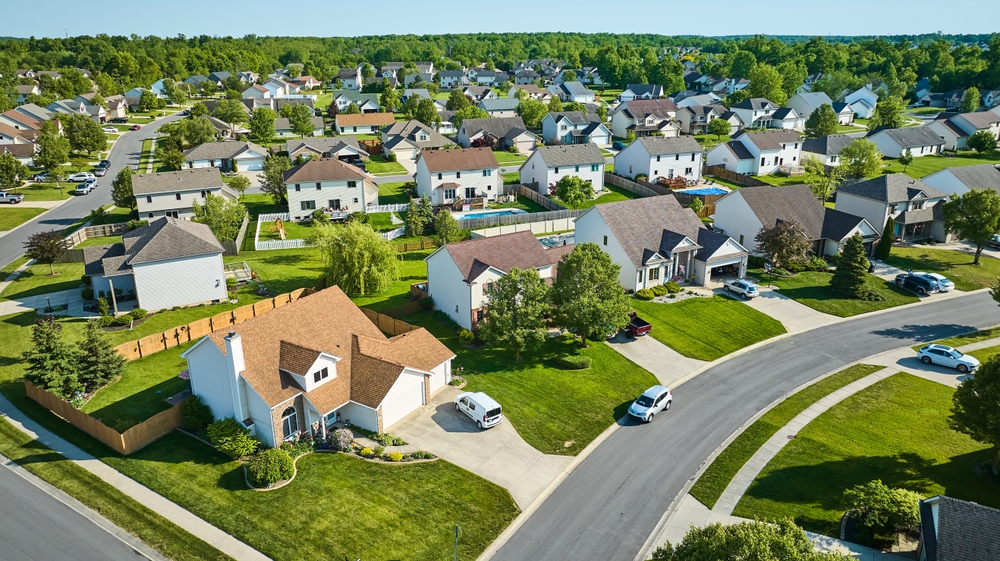
Traditional middle-class neighborhoods are experiencing a hollowing out—they’re either gentrifying into high-end areas that price out long-time residents or declining into struggling communities as those who can afford to leave do so. The stable, mixed-income neighborhoods that characterized mid-20th century America are disappearing, replaced by stark geographic class segregation. You’re either in expensive areas with excellent services or struggling areas with deteriorating infrastructure.
This geographic sorting by class means middle-class families face an impossible choice: stretch budgets to breaking point to access good schools and safe neighborhoods, or accept dramatically lower quality of life in affordable areas. The middle ground where teachers, nurses, and skilled tradespeople could afford to live in decent neighborhoods with good schools is evaporating. This residential polarization reinforces class divisions and limits the social mixing that once characterized American communities.
8. Childcare Costs Exceed Mortgage Payments

Full-time childcare in many areas costs more than in-state college tuition or mortgage payments on modest homes, making it a middle-class budget breaker. Families are making dramatic adjustments—one parent leaving the workforce, relying on family members, or simply not having children—because they cannot figure out how to afford care on middle-class incomes. The mathematics are brutal: if childcare costs $1,500-2,500 per month per child, a family with two young children can easily spend $40,000-60,000 annually after taxes.
This single expense can determine whether families achieve or maintain middle-class status, as it directly impacts workforce participation, family size, and financial stability during crucial wealth-building years. Previous generations didn’t face this burden to the same degree—either one parent stayed home on a single income that could support a family, or childcare was affordable enough not to consume an entire salary. Today’s middle-class families are making impossible choices that previous generations never had to consider.
9. Consumer Debt Levels Are Reaching Crisis Points

Middle-class households are carrying record levels of consumer debt—credit cards, personal loans, and buy-now-pay-later arrangements—just to maintain their standard of living. This debt isn’t funding luxuries; it’s covering grocery shortfalls, car repairs, medical copays, and other basic expenses that incomes no longer stretch to cover. The middle class is increasingly sustained by borrowing rather than earnings, a fundamentally unstable situation.
Credit card balances that never get paid off, perpetual car payments, and layaway plans for back-to-school shopping represent a middle class living beyond its means not by choice but because means haven’t kept pace with basic costs. The debt service itself—minimum payments and interest—further constrains budgets, creating a cycle where borrowing to get by requires more borrowing. This is structurally different from previous middle-class debt patterns, which typically involved mortgages and maybe one car payment, not the constant juggling of multiple high-interest debts.
10. Side Hustles Have Become Necessary, Not Optional

The prevalence of side hustles among middle-class professionals reveals that primary employment no longer provides sufficient income. Teachers drive for rideshare services, accountants sell crafts online, nurses work multiple jobs—not to get ahead but to make ends meet. What’s marketed as entrepreneurship and flexibility is often economic necessity dressed up in optimistic language.
This represents a fundamental shift from middle-class stability, where one job provided adequately for a family, to a hustle economy where continuous multiple income streams are required to approximate middle-class living standards. The physical and mental toll of working 50, 60, or 70 hours across multiple jobs leaves little time for family, community, or the quality of life that middle-class status was supposed to provide. The normalization of exhaustion and constant work as a middle-class requirement shows how far the concept has drifted from its original meaning.
11. Geographic Mobility Has Collapsed

Middle-class Americans are moving less frequently than at any point in modern history, often because they’re financially trapped in specific locations. Homeowners can’t afford to sell and buy in the current market, renters can’t save enough for deposits in new cities, and job changes requiring relocation are declined because of dual-income household constraints. The economic flexibility to pursue opportunities elsewhere has largely disappeared for middle-class families.
This immobility has cascading effects—people stuck in areas with limited job opportunities, families unable to relocate closer to aging parents, and workers passing up better positions because moving isn’t financially feasible. Previous middle-class generations moved for education, opportunity, and lifestyle, viewing geographic mobility as a tool for advancement. Today’s middle class often remains in place not by preference but by financial constraint, representing a loss of freedom that characterized earlier middle-class life.
12. Emergency Savings Have Evaporated

Most Americans, including those who identify as middle class, report they couldn’t cover a $1,000 emergency without borrowing. The recommended three-to-six months of expenses in savings is a fantasy for most middle-class households living paycheck to paycheck, despite seeming financially stable. Car repairs, medical bills, or home emergencies that previous middle-class families could absorb now trigger debt spirals.
This absence of cushion means the middle class is perpetually one crisis away from financial disaster, living with a precariousness that contradicts the entire concept of middle-class stability. The inability to build emergency savings despite full-time employment and careful budgeting shows that the income-to-expense ratio has fundamentally broken for middle earners. Financial advisors still give the same savings advice that worked for previous generations without acknowledging that the math no longer supports those outcomes for most people.
13. Multigenerational Households Are Increasing

Adult children living with parents into their thirties, elderly parents moving in with adult children, and multiple generations sharing housing costs are becoming the norm rather than the exception. This shift is driven by economic necessity—nobody in the household can afford to maintain separate residences at middle-class standards. What was once seen as failure or cultural difference is increasingly recognized as economic adaptation.
The rise of multigenerational housing represents both a loss of the privacy and independence that characterized middle-class life and a return to pre-20th-century living arrangements that the middle class was supposed to have moved beyond. While it can provide childcare support and eldercare solutions, it also reflects the reality that middle-class incomes no longer support the nuclear family household model. The changing living arrangements reveal that “middle class” no longer means what it did when it implied a family home, independence, and generational separation.
14. Middle-Class Amenities Require Upper-Class Income

Activities and purchases that defined middle-class life—annual family vacations, dining out weekly, children’s extracurricular activities, new cars, college without crushing debt—now require income levels that place households in the top 20% of earners. The disconnect between middle-class identity and middle-class purchasing power has never been wider. Families earning median incomes cannot afford what “middle class” culturally signifies.
This creates a situation where most Americans identify as middle class while living nothing like the middle-class lifestyle of previous generations. The gap between cultural expectations and economic reality produces widespread cognitive dissonance and anxiety. Teachers, nurses, and skilled tradespeople—occupations historically considered solidly middle class—can no longer afford the lifestyle their job titles suggest they should have. The title remains, but the substance has been gutted, leaving a middle class in name only.
This article is for informational purposes only and should not be construed as financial advice. Consult a financial professional before making investment or other financial decisions. The author and publisher make no warranties of any kind.